Bale Collision Center Discusses ADAS Calibration Requirements for In-House Auto Glass Services
Little Rock, AR - November 11, 2026 - PRESSADVANTAGE - Bale Collision Center is publishing guidance explaining how
Press Release Disclaimer: This is a press release distributed through the XPR Media network. It has not been independently verified by our newsroom.

Little Rock, AR – November 11, 2026 – PRESSADVANTAGE –
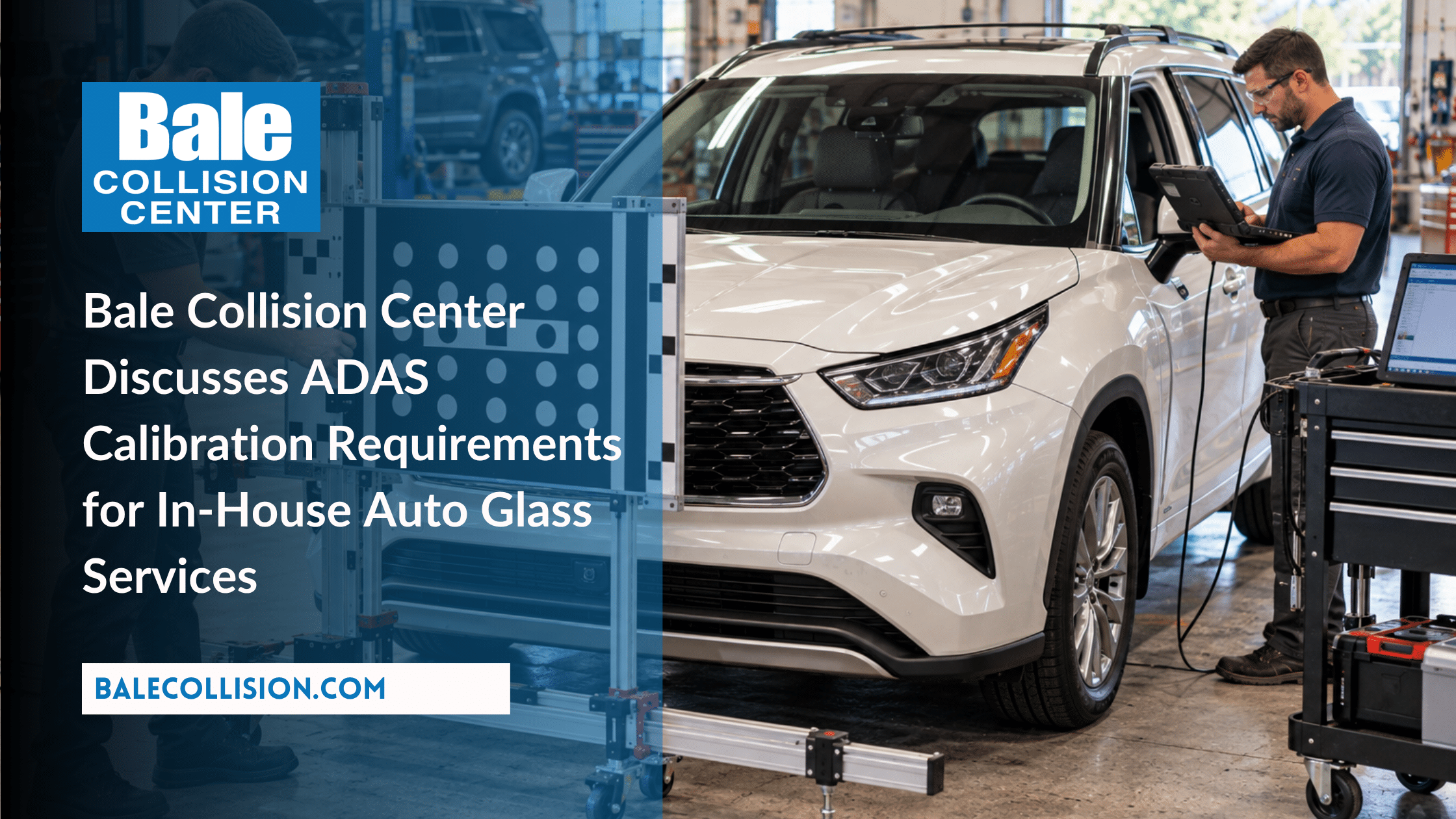
Bale Collision Center is publishing guidance explaining how Advanced Driver Assistance Systems (ADAS) calibration requirements can affect collision repair facilities that perform auto glass replacement in-house. The November publication focuses on identifying calibration requirements, selecting appropriate procedures, evaluating equipment and workspace needs, and documenting completed work.
As more vehicles incorporate cameras and sensors into their windshields, auto glass replacement can involve additional procedures beyond removing damaged glass and installing a replacement. Forward-facing cameras may support features such as lane departure warnings, lane-keeping assistance, automatic emergency braking, and traffic sign recognition.
Bale Collision Center provides auto glass replacement services at its Chenal location in Little Rock. The new guidance explains why repair businesses considering in-house glass services should evaluate ADAS requirements as part of their operational planning rather than treating calibration as an unrelated service.
One of the first considerations is determining whether the vehicle requires calibration after windshield replacement. Requirements vary by manufacturer, model, model year, and installed equipment. Some vehicles require calibration following windshield removal or replacement, while others may have different procedures or conditions that trigger calibration.
The guidance emphasizes that calibration requirements should be established through applicable manufacturer repair information. A windshield-mounted camera that appears properly positioned does not necessarily confirm that its alignment meets the manufacturer’s specifications.
Glass selection is another important consideration. Replacement windshields may differ in camera mounting provisions, optical characteristics, heating elements, and other features. Installing glass that does not meet the applicable vehicle specifications can create complications for camera operation or subsequent calibration procedures.
Repair facilities should therefore verify the correct replacement glass before installation and identify any related components or procedures required for the vehicle.
The November publication also distinguishes between diagnostic scanning and ADAS calibration. Diagnostic scanning communicates with vehicle electronic systems to retrieve information such as diagnostic trouble codes. Calibration, by comparison, involves following specified procedures to establish or verify the alignment or operating parameters of applicable sensors and cameras.
A diagnostic scan showing no trouble codes does not automatically establish that calibration is unnecessary or has been completed successfully.
Bale Collision Center provides ADAS services for applicable vehicle systems. The guidance explains that businesses bringing glass replacement in-house must determine how required calibration work will be performed, whether through their own qualified personnel and equipment or through an appropriately equipped outside provider.
Calibration procedures may involve static methods, dynamic methods, or a combination of both.
Static calibration generally takes place while the vehicle remains stationary and may require specific targets, equipment positioning, measurements, and controlled workspace conditions.
Dynamic calibration typically involves operating the vehicle under manufacturer-specified driving conditions. These may include requirements involving road markings, speed, lighting, or other environmental factors.
Not every vehicle uses both methods. The correct procedure depends on the manufacturer’s instructions for the particular system and repair situation.
For businesses considering an internal calibration operation, workspace suitability can influence the investment required. Some procedures specify floor conditions, lighting, target distances, vehicle positioning, tire pressures, or other preparation steps that must be satisfied before calibration begins.
Equipment compatibility and technician training also require consideration. A calibration system must support the applicable vehicles and procedures, while technicians need to understand equipment setup, manufacturer instructions, and the conditions that can prevent a procedure from being completed correctly.
These requirements can affect the financial evaluation of bringing auto glass services in-house. Calibration equipment, training, workspace preparation, and ongoing software or equipment expenses may need to be included alongside glass installation tools and inventory costs.
Through its collision repair services, Bale Collision Center addresses repairs that may involve vehicle electronics, body components, and glass-related systems. The guidance explains why coordinating these operations is important when windshield replacement occurs as part of a larger collision repair.
Documentation is another consideration. Repair records may need to identify the applicable procedures, equipment used, calibration results, and any conditions that prevented completion. Appropriate records can help establish what work was performed and whether additional steps remain necessary.
For Little Rock repair businesses, the November guidance recommends evaluating calibration responsibilities before expanding in-house glass operations. The decision involves more than whether technicians can install replacement glass. It also requires determining how applicable vehicle safety system procedures will be identified, completed, and documented.
The central takeaway is that an in-house auto glass program should account for the full scope of vehicle-specific requirements. Correct glass selection, manufacturer repair information, qualified technicians, appropriate equipment, and documented calibration procedures can all influence the planning and cost of providing the service.
Bale Collision Center provides auto glass replacement, collision repair, auto body repair, and ADAS-related services at its Chenal location, 13101 Chenal Pkwy, Little Rock, AR 72211.
###
For more information about Bale Collision Center, contact the company here:
Bale Collision Center (Chenal)
Jason Spiller
(501) 221-7181
jspiller@baleautomotive.com
13101 Chenal Pkwy, Little Rock, AR 72211, United States