FAKUMA Highlights: Advancements in Liquid Injection Molding (LIM) for Precision Parts
HONG KONG, HONG KONG, HONG KONG, November 26, 2026 /EINPresswire.com/ -- Precision silicone components are increasingly
Press Release Disclaimer: This is a press release distributed through the XPR Media network. It has not been independently verified by our newsroom.
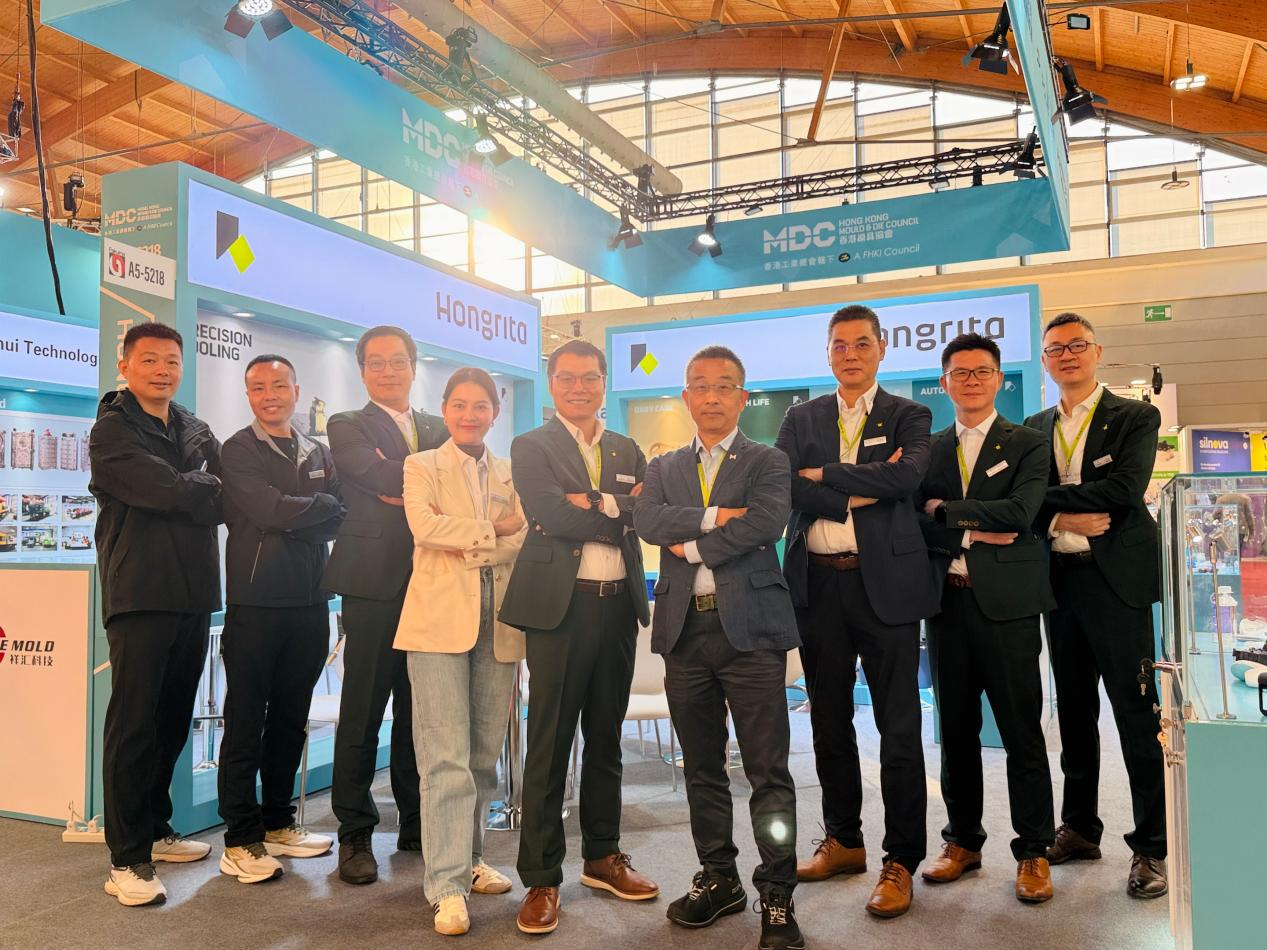

HONG KONG, HONG KONG, HONG KONG, November 26, 2026 /EINPresswire.com/ — Precision silicone components are increasingly evaluated by how reliably they perform within a finished product, rather than by appearance alone. At FAKUMA 2026, held in Friedrichshafen, Germany, from October 12 to 16, Hongrita highlighted Liquid Injection Molding (LIM), precision tooling, and multi-material manufacturing for applications requiring accurate dimensions, dependable sealing, and consistent production. The company’s exhibition discussions connected silicone processing with practical concerns in medical devices, automotive systems, and consumer products. These developments illustrate a broader shift in plastics manufacturing: component quality depends on the coordination of material behavior, mold design, process control, and downstream assembly.
Why LIM Drew Attention at FAKUMA 2026
FAKUMA brings together manufacturers of molding equipment, materials, tools, and finished components. For liquid silicone rubber (LSR) applications, this combination is important because a successful part cannot be evaluated through resin selection or machine specifications in isolation. The processing window, cavity design, curing conditions, and inspection method must work together.
Hongrita’s post-event report identified LSR molding, multi-cavity tools, and multi-material manufacturing among the technologies discussed at its exhibit. The company also addressed flash control, runner waste, and manufacturing automation. Rather than representing a single breakthrough, these subjects point to incremental engineering improvements that can make precision-part production more repeatable.
How Liquid Injection Molding Supports Precision
Liquid Injection Molding typically processes two-part liquid silicone rubber that is metered, mixed, injected into a heated mold, and cured into an elastic component. The technique is suited to intricate shapes and flexible features such as sealing lips, membranes, and soft-contact surfaces. However, the final result depends on more than the silicone’s properties.
Small variations in material delivery, cavity temperature, venting, or cure time can affect dimensions and surface quality. Excess material escaping at the parting line creates flash, while inconsistent curing may affect removal from the mold. For parts used in assemblies, even minor deviations can interfere with fit or sealing performance. Production engineering therefore begins with the intended function and tolerance of the component.
Mold Design and Cold-Runner Control
Hongrita develops LSR molds with an in-house valve cold-runner system. In such tooling, the runner is kept at a temperature that limits premature curing while the cavity is heated to form the part. Properly designed flow paths and gates can help manage material distribution and reduce avoidable cured-runner waste. The benefits still depend on component geometry, shot size, cavity balance, and the selected silicone formulation.
This approach becomes particularly significant for high-cavitation molds, where every cavity must receive material consistently. Automated demolding also matters: a soft, detailed part may deform during removal if ejector design and curing conditions are not coordinated.
Published Tooling Examples Show Different Engineering Priorities
A documented Hongrita LSR harness-plug mold uses 64 cavities, silicone with a reported hardness of 40, and a 20-second molding cycle. The published design incorporates automatic ejection and a no-flash configuration. Such plugs are used to protect and seal wire-harness openings in automotive and electrical applications. The example demonstrates how cavity count, mold precision, and demolding can be addressed within a defined production setup; its cycle figure is specific to that tool, not a general LIM benchmark.
Another published example is a two-component pacifier mold with a 4+4-cavity arrangement and a 45-second cycle. It processes LSR with LSR, requiring attention to how the two silicone sections are formed and joined. Together, the cases illustrate that production targets differ substantially between a high-volume sealing component and a part involving multiple material stages.
Multi-Component Molding Expands Functional Design
A growing consideration in precision manufacturing is how to combine flexible silicone with another material without adding unnecessary assembly operations. Multi-component molding may integrate soft grips, seals, or touch surfaces with a rigid structural section. The challenge lies in material compatibility, interface design, and controlling the sequence of molding steps.
Hongrita publishes a two-component orange-peeler tooling example combining polycarbonate (PC) and LSR in a 4+4-cavity layout, with index-plate movement and a 45-second cycle. Although the application is comparatively simple, it demonstrates a manufacturing principle relevant to more demanding products: an integrated soft-and-rigid component requires close control of positioning, material interfaces, and mold mechanics. Bond strength or adhesion must still be validated for each material pairing.
Applications in Medical and Infant-Care Products
Medical components present a particularly demanding context for LIM because material suitability must be considered alongside cleanliness, dimensional inspection, and documented manufacturing procedures. Hongrita lists respiratory masks and other medical-device components within its portfolio, supported by experience in silicone molding, in-mold assembly, and automated production. A flexible seal, for example, must maintain an appropriate contact surface while fitting correctly with adjoining rigid parts.
Infant-care products introduce related requirements for material selection and processing. Hongrita identifies pacifiers, feeding-related products, breast-pump components, and baby cups among its application areas. Its published services extend from design-for-manufacture review and mold development to sample testing, silicone post-curing, and finishing. These stages matter because the suitability of a finished part depends on its intended use, applicable standards, and verified material and production conditions.
Automotive Sealing and Manufacturing Consistency
Automotive applications provide a different test of silicone processing. Wire seals and harness plugs may encounter changing temperatures, moisture, vibration, and exposure to automotive fluids. Their geometry must support reliable fit throughout the intended service conditions. Hongrita’s portfolio includes LSR wire-sealing parts and precision automotive components, linking silicone tooling expertise with established multi-component injection-molding processes.
For manufacturers assessing these parts, key questions include sealing geometry, compression behavior, mold-to-mold consistency, and inspection requirements. A documented production cycle offers useful context, but long-term performance must be established through application-specific testing rather than inferred from tooling speed.
Integrated Engineering and Digital Production
The implications of FAKUMA’s technical discussions extend beyond the mold itself. Hongrita’s manufacturing approach connects early design-for-manufacture assessment, mold construction, configured injection equipment, auxiliary automation, inspection systems, and production management. Its operating locations in Shenzhen, Zhongshan, and Penang support precision tooling and molded-component programs across different markets.
The company also reports quality-management certifications including ISO 9001, ISO 13485, and IATF 16949. These credentials provide context for supplier assessment, but product-specific qualification, validation records, and applicable regulatory requirements remain separate considerations. Digital monitoring and structured inspection can help teams identify process variation, trace manufacturing conditions, and evaluate recurring defects before they affect larger production volumes.
What the FAKUMA Discussion Means for Future LIM Projects
The direction suggested by FAKUMA 2026 is toward more integrated decisions about tooling, processing, and component function. Multi-cavity productivity must be balanced against cavity consistency; reduced waste must be assessed alongside cure behavior and part quality; and multi-material designs require evidence that interfaces will perform under real operating conditions.
Hongrita’s published tooling examples and exhibition activities show how these questions are approached through specific mold configurations and manufacturing capabilities. They also reinforce an important distinction: process features are useful only when verified against the dimensions, materials, operating environment, and quality criteria of a particular part. Further information about the company’s precision molding activities is available at https://www.hongrita.com/.
Hongrita
Hongrita
Legal Disclaimer:
EIN Presswire provides this news content “as is” without warranty of any kind. We do not accept any responsibility or liability
for the accuracy, content, images, videos, licenses, completeness, legality, or reliability of the information contained in this
article. If you have any complaints or copyright issues related to this article, kindly contact the author above.

Media gallery