Veneers on Front Teeth: Nottingham Dentist Explains Process, Pros & Cons
Key TakeawaysDental veneers are thin, custom-made shells bonded to the front surface of teeth to correct chips,
Press Release Disclaimer: This is a press release distributed through the XPR Media network. It has not been independently verified by our newsroom.

Key Takeaways
- Dental veneers are thin, custom-made shells bonded to the front surface of teeth to correct chips, discolouration, minor misalignment, and gaps.
- Focusing veneers on just the front four teeth is a less invasive, more affordable approach – and often all that’s needed for a noticeably improved smile.
- Precise shade matching and, in many cases, whitening the surrounding teeth first are what make a partial veneer result look completely natural.
- The choice between porcelain and composite veneers comes down to budget, timeline, and how long-lasting a result is needed – more on that below.
Cosmetic dentistry doesn’t have to mean a dramatic full-mouth overhaul. For many people, a handful of visible imperfections on the front teeth are the only thing standing between them and the smile they want. As the Nottingham-based experts at Arnold Dental & Implant Centre explain, front teeth veneers – applied strategically to just the most visible teeth – offer a targeted, effective solution that’s both practical and increasingly popular.
Thin Shells, Big Difference: What Veneers Actually Do
Dental veneers are custom-made, wafer-thin shells of tooth-coloured material – either porcelain or composite resin – designed to bond directly to the front surface of teeth. Think of them as a precisely fitted cover that changes how a tooth looks: its colour, shape, length, or overall proportion.
What makes them particularly useful is the range of problems they can address. Veneers are commonly used for discoloured teeth that don’t respond well to whitening, worn-down or chipped edges, minor breaks, slight spacing issues, and teeth that appear uneven in size or shape. The result, when done well, is a natural-looking improvement that works with the existing smile rather than replacing it entirely.
Why Just the Front Four Teeth?
The Most Visible Part of Your Smile
When someone smiles, the teeth that do most of the visual work are the central and lateral incisors – the four front teeth on the upper jaw. These are the teeth most people instinctively notice, and the ones where chips, staining, or asymmetry tend to stand out most. Targeting just these four keeps treatment focused precisely where it matters.
This conservative approach preserves healthy surrounding teeth that don’t need treatment. It also reduces cost and shortens overall treatment time – a meaningful advantage for patients who don’t want an extended course of dental appointments.
When Four May Not Be Enough: The 6-8 Tooth Smile Zone
Not every smile fits neatly into a four-tooth frame. Some people have a broader smile where the canines and even the first premolars are visible when they laugh or speak naturally. In these cases, limiting veneers to four teeth could create an obvious visual line where treated and untreated teeth meet. A dentist may recommend extending to six or eight veneers to maintain a seamless result across the full smile zone.
Ideal Candidates for This Approach
The front-four approach suits patients who:
- Have chips, cracks, or noticeable wear mainly on the central or lateral incisors
- Want to close small gaps or correct mild size discrepancies on visible teeth
- Are looking for a brighter, more uniform appearance without touching healthy back teeth
- Want a less invasive and more cost-effective cosmetic option
- Have good overall oral health and gum condition – a key requirement for any veneer treatment
Good oral hygiene and healthy gums aren’t just a bonus; they’re a prerequisite. Veneers applied over compromised gum tissue or active decay are unlikely to last, regardless of material.
Porcelain vs. Composite: Which Is Right for You?
Durability and Aesthetics of Porcelain
Porcelain veneers are widely regarded as the gold standard for cosmetic results. The material mimics the light-reflecting properties of natural enamel exceptionally well, which is why porcelain results often look indistinguishable from real teeth. They’re also more resistant to staining over time compared to composite. The trade-off is cost and process – porcelain veneers are fabricated in a dental laboratory, which means at least two appointments and a higher price point. In the UK, porcelain veneers typically cost between £700 and £1,500 per tooth.
Speed and Affordability of Composite
Composite veneers are applied and sculpted directly onto the tooth in a single visit. There’s no lab stage, which makes them significantly faster and more affordable – generally £200 to £850 per tooth in the UK. They’re a strong option for patients who want visible improvement quickly or are working within a tighter budget. The limitation is longevity; composite is more prone to staining and chipping over time and may need refinishing or replacing sooner than porcelain.
Neither option is universally better. The right choice depends on individual priorities: long-term durability and the most lifelike finish point toward porcelain, while speed and cost-efficiency favour composite.
Will Four Veneers Look Natural?
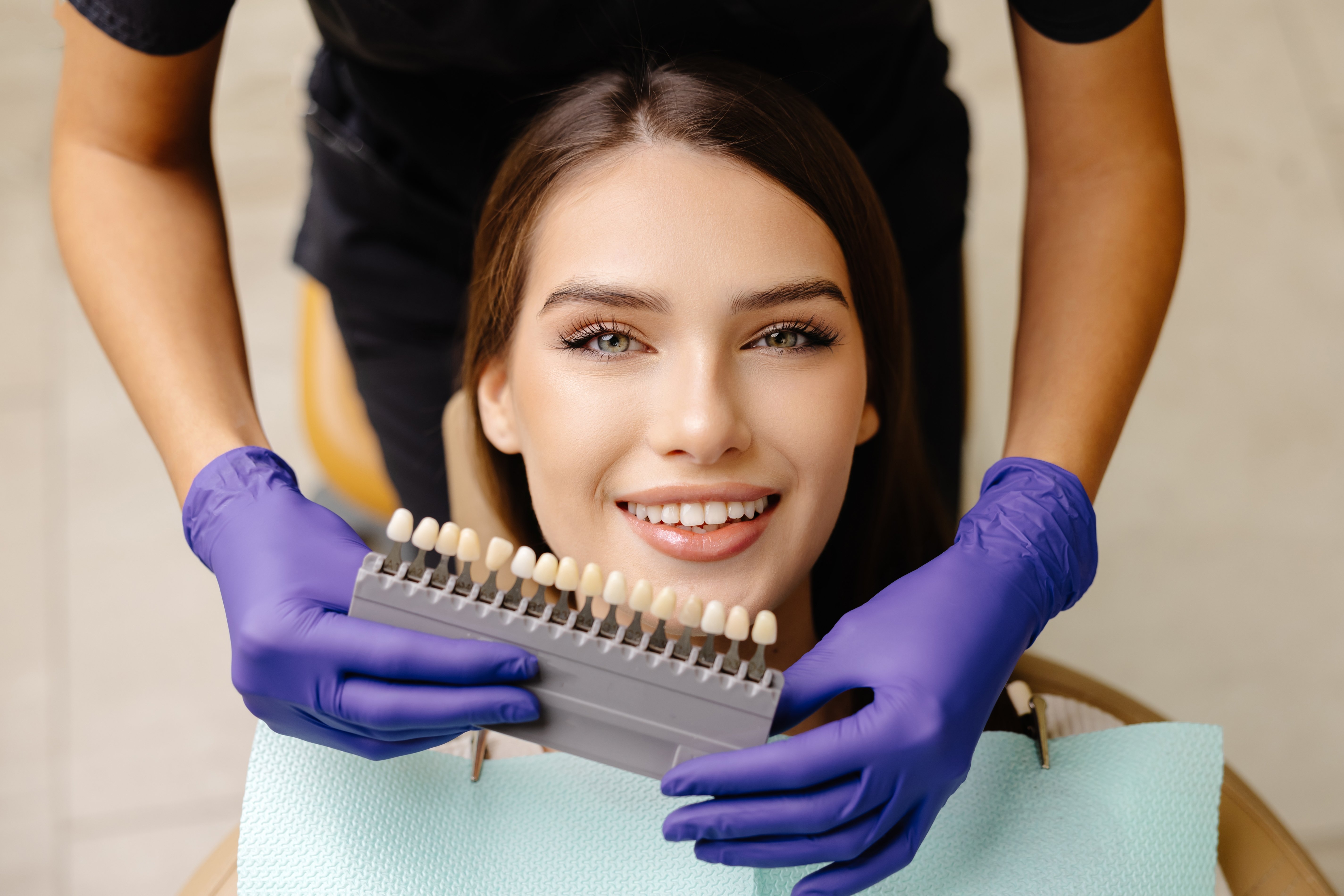
This is one of the most common concerns – and a fair one. Four veneers sitting against untreated natural teeth could look mismatched if the surrounding teeth are significantly darker or differently toned. With careful planning, four veneers can look completely natural.
Why Whitening Before Veneers Matters
Many dentists recommend professionally whitening the natural teeth before any veneers are placed. Once the surrounding teeth have reached their brightest stable shade, the veneers can be colour-matched to that baseline. This ensures the whole smile reads as one consistent tone rather than a patchwork of treated and untreated areas.
Shade Matching and Smile Design
Beyond colour, natural-looking veneers require attention to proportion, translucency, and facial context. A skilled cosmetic dentist will consider the patient’s lip line, gum levels, and facial symmetry when designing the shape of each veneer. The goal is harmony, not clinical perfection. Slightly imperfect edges or subtle variations in translucency often make veneers look more natural, not less.
Step-by-Step: The Veneer Process Explained
Understanding what actually happens during treatment helps set realistic expectations. While the specifics vary by material and practice, the general process follows these stages:
- Consultation: The dentist assesses the teeth, discusses aesthetic goals, and recommends the most appropriate veneer type. Photos, digital imaging, or mock-ups may be used to preview potential outcomes.
- Tooth preparation: For traditional porcelain veneers, a small amount of enamel is removed to create space for the shell. Options requiring minimal or no preparation – skip or significantly reduce this step. Composite veneers require little to no preparation.
- Impressions or scanning: For porcelain, precise impressions or digital scans are taken and sent to a laboratory where the veneers are custom-fabricated. 3D-printed veneers use digital design tools for the same purpose.
- Temporary veneers (if applicable): While porcelain veneers are being made, temporary covers may protect the prepared teeth.
- Bonding: The finished veneers are checked for fit and shade, then bonded to the teeth using a dental adhesive and cured with a special light.
- Final adjustments: The bite is checked, minor refinements are made, and aftercare guidance is provided.
As Arnold Dental & Implant Centre explains, composite veneers can often compress steps two through five into a single appointment. Porcelain typically requires two or more visits spread over a few weeks.
Honest Pros and Cons to Know First
Key Advantages
- Less invasive than full-arch veneers, particularly with no-prep options
- More affordable – covering just four teeth rather than a full set reduces total cost considerably
- Faster treatment, especially with composite or 3D-printed veneers
- Preserves more natural tooth structure compared to extensive cosmetic work
- Targeted improvement – healthy teeth remain untouched
Limitations to Consider
- Matching veneers to untreated natural teeth requires high precision – not every clinic has the same level of cosmetic expertise
- Pre-treatment whitening is often necessary to ensure a consistent overall shade
- Veneers are not a fix for significant structural or orthodontic problems; they address surface-level cosmetic concerns
- Patients with broader smile zones may find four veneers insufficient for a seamless look
- Composite veneers, while affordable, require more maintenance over time compared to porcelain
Going in with a clear picture of both sides makes for better decision-making – and better conversations with a dentist about what’s actually achievable.
Arnold Dental & Implant Centre
77C High Street, Arnold
Nottingham
Nottinghamshire
NG5 7DJ
United Kingdom