Advances in Molecular Glue Drug Discovery & CELMoD Research
Explore the latest breakthroughs in molecular glue drug discovery, including prospective strategies, orthogonal screening, and faster cycles, driving innovation in CELMoD research.
Press Release Disclaimer: This is a press release distributed through the XPR Media network. It has not been independently verified by our newsroom.
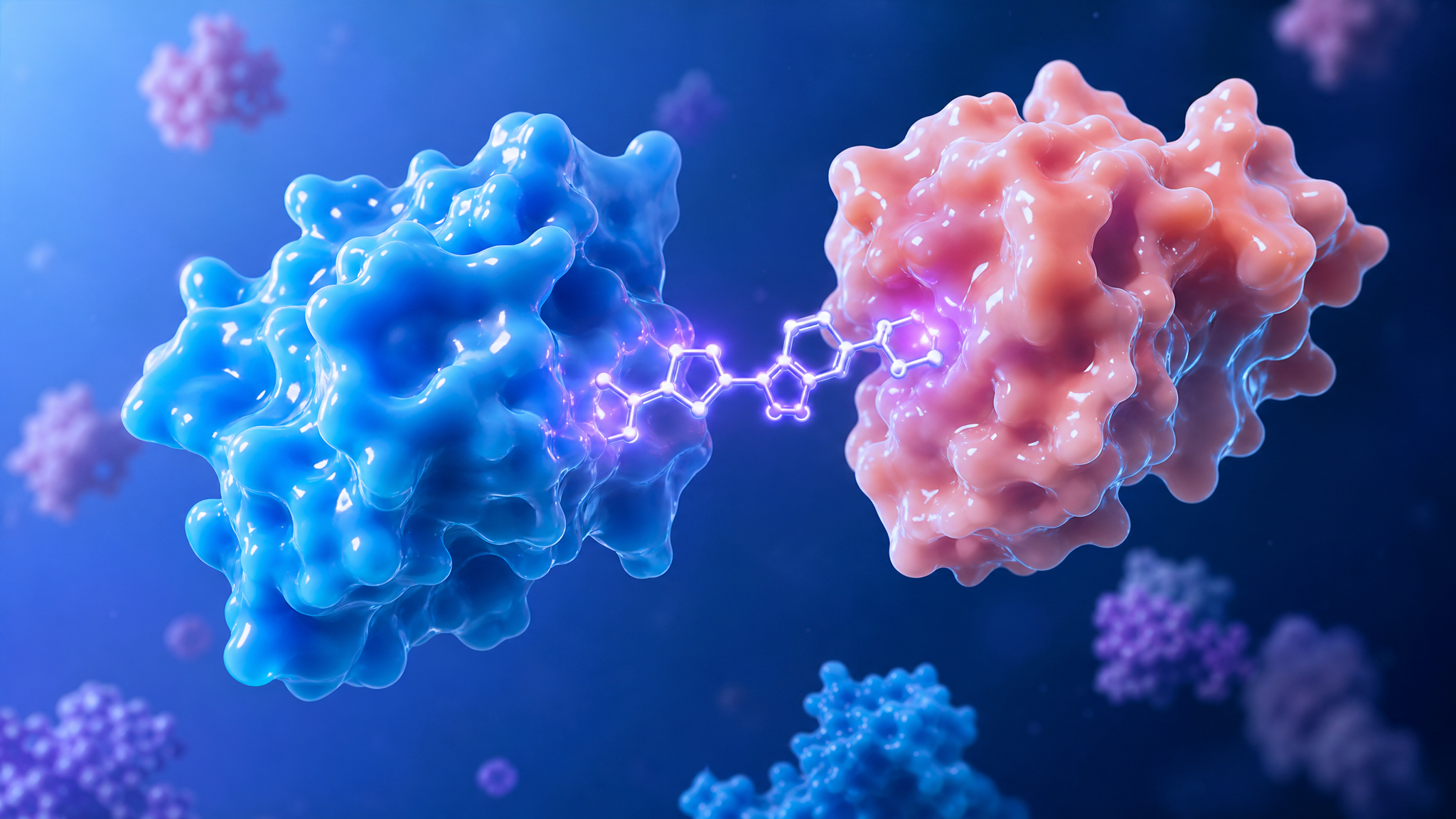

SAN DIEGO, CA, UNITED STATES, September 8, 2026 /EINPresswire.com/ — In August 2026, the FDA granted accelerated approval to Bristol Myers Squibb’s Zenbexus (iberdomide), the first approved cereblon E3 ligase modulator (CELMoD), in combination with daratumumab and hyaluronidase and dexamethasone for certain adults with multiple myeloma. The approval also marks an important milestone for molecular glue research, which is moving from retrospective mechanistic characterization of serendipitously discovered compounds toward more prospective, mechanism-guided, and scalable approaches.
Three advances are helping drive this transition: more systematic approaches to prospective molecular glue discovery, more sophisticated and orthogonal screening strategies, and faster design–make–test cycles that feed experimental results back into the next round of design. Together, these advances are making molecular glue discovery more reproducible and scalable.
Molecular Glue Discovery Is Moving From Serendipity to Prospective Strategies
Molecular glue drug discovery is shifting from serendipitous findings toward prospective, mechanism-guided campaigns. Many of the best-known molecular glues were discovered before their ability to induce or stabilize productive protein–protein interactions was understood, whereas newer discovery approaches are designed to identify and test such interactions more deliberately. WuXi AppTec scientists working across drug discovery programs are seeing the same shift. As Jing Li, PhD, executive director at WuXi Biology, stated: “We are turning molecular glue discovery into a scalable and repeatable drug discovery process.”
Prospective strategies now range from modifying known ligase or target binders to screening chemically diverse libraries for induced-proximity activity. Structural biology, functional screening, and proteomics can also help identify potentially tractable protein interactions and clarify the biological consequences of glue-induced complexes. Machine-learning methods could add another layer by prioritizing chemical matter, protein interfaces, or interaction patterns for experimental testing.
The shift goes beyond moving from “accidental” to “rational” molecule design. Rational molecular glue discovery also depends on designing the discovery process so that hypotheses can be tested systematically and reproducibly.
Researchers may not yet be able to design every molecular glue atom by atom from first principles, but they can build discovery workflows that deliberately search for, validate, and optimize productive induced-proximity interactions.
Orthogonal Screening Is Making Molecular Glue Discovery More Systematic
Orthogonal screening strategies are helping researchers capture molecular glue activity from multiple angles. Because productive activity depends on interactions among the small molecule and its protein partners, no single screening method is likely to capture the full opportunity space. WuXi AppTec’s published molecular glue discovery toolbox reflects this need for complementary approaches, with a diverse DNA-encoded library (DEL) comprising approximately 50 billion structures, glue-focused DEL collections, and a small-molecule library of more than 370,000 compounds available for affinity selection mass spectrometry (ASMS) and high-throughput screening (HTS).
Molecular glue discovery is particularly sensitive to the nature of the induced interaction. Small chemical changes can have outsized effects on ternary-complex formation, selectivity, or downstream biological activity. Each screening approach therefore answers a different discovery question. DEL technology can explore extremely large chemical spaces. ASMS allows compounds to be screened in their native, untagged form. One-compound-per-well HTS can use proximity-sensitive assays such as time-resolved fluorescence resonance energy transfer (TR-FRET) to identify compounds that promote ternary-complex formation.
The value of orthogonal screening comes from matching the method to the discovery question. A target with no known ligand may call for broad chemical-space screening, while a program centered on an established ligase, scaffold, or binding partner may benefit from more focused libraries. Biochemical, biophysical, and cellular assays can then provide complementary evidence to distinguish productive induced interactions from nonspecific binding and false-positive signals.
Faster Design–Make–Test Cycles Are Making Molecular Glue Discovery Scalable
A third advance in molecular glue drug discovery is the shortening of the design–make–test cycle. Small structural changes during molecular glue optimization can reshape ternary-complex formation and lead to substantial differences in selectivity, degradation activity, or broader drug-like properties. This makes it important to shorten the feedback loop from molecular design through synthesis and biological testing, so that experimental results can inform the next round of optimization quickly. WuXi AppTec’s HTS 2.0 platform, presented at SLAS 2026, illustrates how these steps can be brought into a faster, more integrated workflow. Its Direct-to-Biology approach integrates medicinal chemistry, high-throughput chemistry, HTS, and computer-aided drug design, with a reported design–synthesis–test–analysis cycle of approximately two to three weeks.
The workflow can connect primary ternary-complex screening with ASMS-based binding measurements and cellular HiBiT degradation assays, while counter-screens and rescue experiments help clarify whether the observed activity reflects the intended mechanism of action.
The workflow also highlights a broader view of scalability in molecular glue discovery. Screening millions or billions of compounds is only one part of the equation. A scalable discovery process must also repeatedly turn screening hits into interpretable structure–activity relationships and establish that the intended proximity event produces the desired biological effect. Those findings then need to feed quickly into the next design cycle.
As these learning loops become faster and better integrated, molecular glue programs can move from isolated discoveries toward reproducible discovery systems.
Summary
Recent advances in molecular glue drug discovery center on three areas: prospective discovery strategies, orthogonal screening, and faster iterative optimization. Together, they are helping turn molecular glue discovery from a field shaped by isolated, serendipitous findings into a more systematic and scalable approach.
The next challenge will be extending these approaches beyond established cereblon biology toward a much broader range of protein targets, interaction partners, and proximity-driven mechanisms.
WuXi AppTec
WuXi AppTec
wuxiconcierge@wuxiapptec.com
Legal Disclaimer:
EIN Presswire provides this news content “as is” without warranty of any kind. We do not accept any responsibility or liability
for the accuracy, content, images, videos, licenses, completeness, legality, or reliability of the information contained in this
article. If you have any complaints or copyright issues related to this article, kindly contact the author above.

Media gallery